Startup Booted Fundraising Strategy: How to Raise Capital Without Losing Control in 2026
Key Takeaways
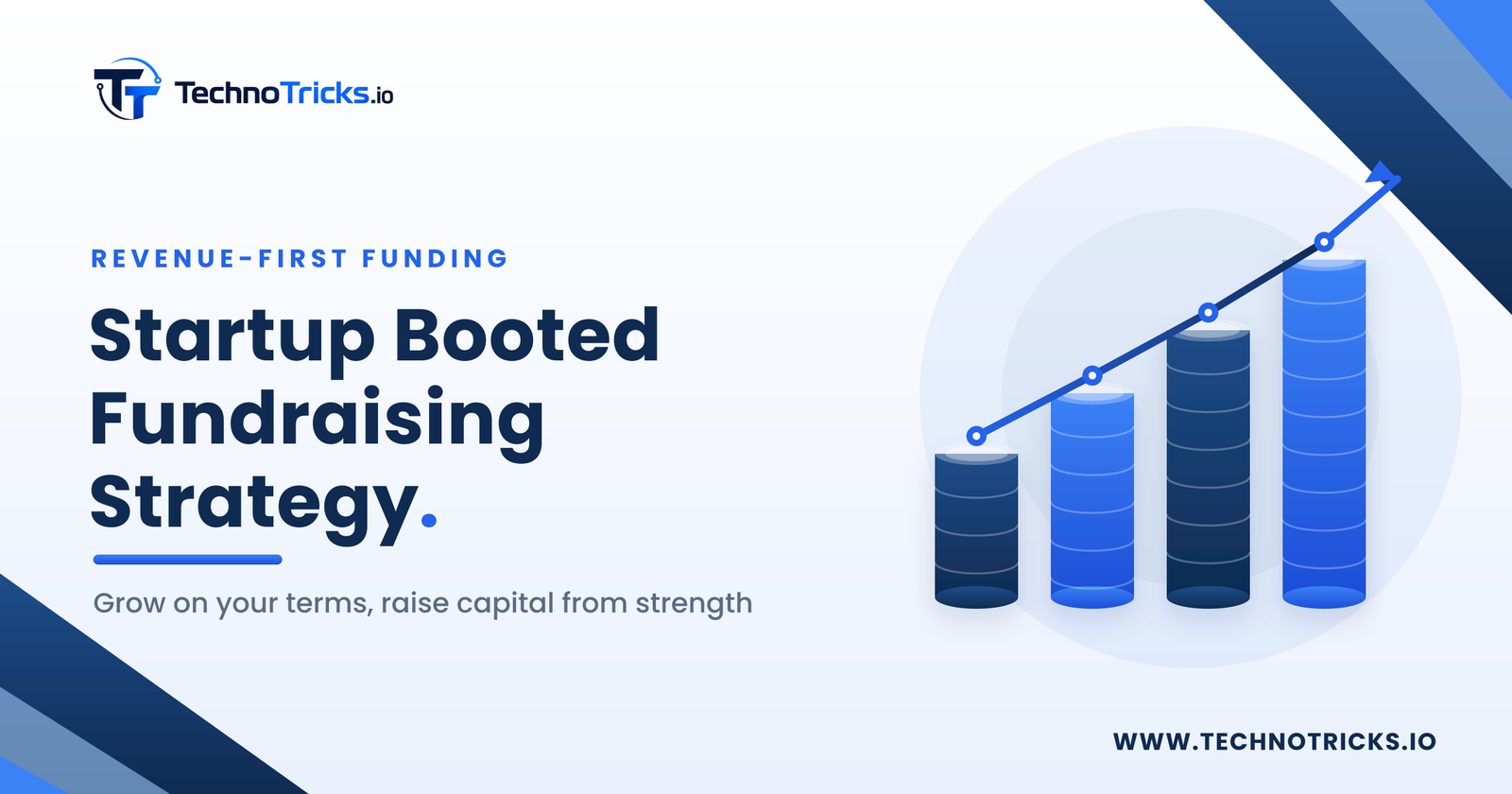
- A Startup Booted fundraising strategy means growing your company on personal savings, early customer revenue, and lean operations first — then raising outside money selectively, from strength.
- “Booted” is casual shorthand for “bootstrapped,” but with one key upgrade: a deliberate plan for when and how to bring in capital, not just avoiding it.
- The goal is leverage, not poverty. Proving demand before you raise gives you better valuations and far less equity dilution.
- It’s not for everyone. Winner-take-all, capital-heavy, or speed-critical markets may still demand a fast, big raise.
- Track the right numbers first: runway, burn rate, CAC, LTV, MRR, churn, and gross margin. These are what serious investors check.
Most startups don’t die from bad ideas. They die from raising the wrong money at the wrong time — and handing away control to fix a problem revenue could have solved. This guide shows you the disciplined alternative founders are quietly winning with in 2026.
Quick Answer
A Startup Booted fundraising strategy is a founder-led approach where you build the business using personal savings, early customer revenue, and lean spending before pursuing venture capital — then raise external funding only when it amplifies an already-working engine. It keeps you in control, minimizes equity dilution, and lets you raise later from a position of strength instead of desperation. It suits SaaS, software, digital, and service businesses with manageable Startup costs, and it’s gaining ground in 2026 as investors reward capital efficiency over growth-at-all-costs.
What is a startup booted fundraising strategy, exactly?
Let’s clear up the wording first, because it trips people up. You’ll see “booted startup” all over the web right now, but the correct business term is bootstrapped. Same idea: you fund growth with your own resources and revenue rather than giving away equity on day one.
Here’s the important distinction, though. Plain bootstrapping is just “self-fund and avoid investors.” A booted fundraising strategy is the more intentional version — it includes a structured plan for the moment you do bring in outside capital. You’re not swearing off investors forever. You’re earning the right to raise on your terms.
Think of it like renovating a house before selling. You don’t list a crumbling property and beg for offers. You fix it, prove its value, then negotiate from strength. Booted fundraising applies that same logic to equity: build value first, sell ownership later — and only as much as you need.
Booted vs. traditional VC funding: what’s the real difference?
The two models aren’t just different tactics. They’re different philosophies about growth, control, and risk.
| Factor | Booted (revenue-first) | Traditional VC |
|---|---|---|
| Starting fuel | Savings + customer revenue | Investor capital |
| Speed | Steady, sustainable | Aggressive, fast |
| Founder control | High — you keep the wheel | Reduced with each round |
| Equity dilution | Minimal | Significant over time |
| Main goal | Profitability + traction | Rapid market dominance |
| Raises money | Later, from strength | Early, from vision |
| Best fit | SaaS, digital, services, low-capital | Capital-heavy, winner-take-all |
Methodology: this compares the two approaches on the trade-offs founders consistently weigh — control, dilution, pace, and capital efficiency — drawn from how both models are described across 2026 startup-funding guides.
Neither wins outright. The right answer depends on your market and your appetite for control versus speed — which is exactly the nuance most listicles skip.
Why is booted fundraising taking off in 2026?
Here’s what changed. For years, the loudest advice was “raise fast, raise big.” Then capital markets tightened, and the game shifted. Investors stopped rewarding growth-at-all-costs and started scrutinizing capital efficiency — how much runway a founder can create from every dollar.
That shift quietly rewarded the disciplined. A founder who already generates revenue doesn’t need a term sheet to survive the month. They can walk into a raise with paying customers, real traction, and the ability to say no. And “the ability to say no” is the single most valuable position in any negotiation.
So the strategy isn’t a trend born of nostalgia. It’s a rational response to a market that now prizes resilience over hype.
What are the core principles of booted fundraising?
Strip away the jargon and the approach rests on a few simple ideas:
- Earn before you raise. Revenue is the cheapest, least dilutive capital there is — customers don’t take equity.
- Prove demand first. Build a minimum viable product (MVP), find paying users, and validate that people actually want what you’re selling.
- Stay lean. Every unnecessary cost shortens your runway and weakens your leverage. Spend on what moves the business, not what looks impressive — and lean on startup tools that scale with your stage instead of piling on overhead.
- Raise for a milestone, not a mood. Only bring in capital when it accelerates a working engine toward a specific next goal.
- Guard ownership. Understand equity dilution deeply, because the shares you give away early are the most expensive shares you’ll ever sell.
Which Funding sources fuel a booted startup?
A booted strategy isn’t “no money.” It’s smart, selective money. The typical stack includes:
- Personal savings — the founder’s initial fuel for the MVP.
- Customer revenue — the engine that funds ongoing growth.
- Reinvested profits — plowing early earnings back into the business.
- Non-dilutive funding — government grants, competitions, and crowdfunding that don’t cost equity.
- Strategic partnerships — deals that bring reach or resources without a cap table hit.
- Selective external capital — angel investors or venture capital, brought in later and on your terms.
The order matters. You climb this ladder rung by rung, adding outside capital only when the lower rungs have done their job.
The metrics investors check before you raise
Here’s what I wish more first-time founders knew: when you finally do raise, investors don’t fall for a good story alone. They open your numbers. Before you approach anyone, know these cold:
- Runway — how many months of cash you have left.
- Burn rate — how fast you’re spending it.
- CAC (Customer Acquisition Cost) — what it costs to win one customer.
- LTV (Lifetime Value) — what that customer is worth over time.
- MRR (Monthly Recurring Revenue) — your predictable monthly income.
- Churn — how many customers you lose each month.
- Gross margin — how much profit each sale actually keeps.
Strong unit economics — where LTV comfortably exceeds CAC — is the difference between “we’ll pass” and “how much are you raising?” These numbers are your pitch.
How do you execute a Booted Fundraising Strategy step by step?
The path grows in stages, each proving something before you spend on the next:
- Validate the problem. Talk to real potential customers before writing a line of code. Confirm the pain is real and people will pay to remove it.
- Build a lean MVP. Ship the smallest version that solves the core problem. Use personal savings or side income here.
- Land paying customers. Revenue from real users is the ultimate proof. Even small numbers change everything.
- Improve unit economics. Lower CAC, raise LTV, cut churn, protect margins. Make the engine efficient.
- Add non-dilutive fuel. Layer in grants, crowdfunding, or partnerships to extend runway without giving up equity.
- Raise selectively — if needed. With traction and clean metrics, approach angels or VCs for a specific milestone, and dilute as little as possible.
When is Booted Fundraising the wrong choice?
Now the contrarian truth most of these guides bury: this strategy is not universal, and pretending it is would be dishonest.
If you’re in a winner-take-all market — where the first company to scale locks in the network effects and everyone else starves — moving slowly can be fatal. Capital-intensive businesses (hardware, deep tech, biotech) often can’t bootstrap; the upfront costs are simply too high to fund from a side income. And in categories racing toward a land-grab, a fast, large raise isn’t reckless — it’s survival.
So the honest question isn’t “bootstrap or raise?” It’s “does my market reward patience or speed?” Answer that first. If your market rewards trust, quality, and recurring revenue, booted fundraising is a superpower. If it rewards pure velocity, discipline alone won’t save you.
Frequently asked questions
What is a startup booted fundraising strategy?
It’s a founder-led approach that funds growth with personal savings, early customer revenue, and lean operations before raising external capital — keeping control and minimizing equity dilution, then raising selectively from a position of strength.
Is booted fundraising the same as bootstrapping?
Closely related, but not identical. Bootstrapping is the general idea of self-funding. A booted fundraising strategy adds a deliberate plan for when and how to bring in outside money later, rather than avoiding investors entirely.
Who is this strategy best for?
Founders in SaaS, software, digital, and service businesses with manageable startup costs — especially those who value ownership and long-term control over rapid, investor-funded scale.
Does it mean never taking investment?
No. It means raising at the right time, for a clear milestone, and on your terms — after you’ve proven demand and built strong unit economics.
Which numbers should I track before raising?
Runway, burn rate, CAC, LTV, MRR, churn, and gross margin. Investors will scrutinize these, so strong unit economics should come before any pitch.
The bottom line
A Startup Booted Fundraising Strategy isn’t about avoiding money — it’s about earning leverage. You build value first, keep control longer, and raise capital only when it amplifies something already working. In a 2026 market that rewards capital efficiency, that discipline has quietly become a competitive edge.
But be honest with yourself about your market before you commit. So here’s the question worth sitting with: is your business one that wins by proving value slowly and surely — or one that must move fast before someone else takes the space? Your funding strategy should follow that answer, not the other way around.